Civil Engineering diploma in Varanasi.
The Diploma in Civil Engineering at BIPE is a 3-year, 6-semester BTEUP programme (code 322), AICTE-approved, JEECUP-admitted under institute code 4455 — 120 seats, AFRC tuition ₹30,150/year. The curriculum covers building construction, surveying, transportation, hydraulics and structural design, with field practice at the campus survey yard and live construction sites in and around Phoolpur. India's Smart Cities, Bharatmala and Kashi Vishwanath corridor work need civil diploma holders by the thousand — SSC JE and RRB JE are direct pathways.
What you'll learn. Six semesters.
BTE UP polytechnic curriculum for code 322 — the six-semester sequence below covers theory, lab work and mandatory training. Semester 6 includes a 6-month industrial training and a final project assessed by external examiners.
Subject names below follow the standard BTE UP polytechnic curriculum. For the exact subject list, codes and marks distribution applicable to your admission year, refer to the official BTE UP gazette.
- Communication Skills in English
- Engineering Mathematics – I
- Engineering Physics
- Engineering Chemistry
- Engineering Drawing
- Basic Civil Engineering
- Workshop Practice
- Communication Skills in English – II
- Engineering Mathematics – II
- Applied Mechanics
- Building Materials & Construction
- Surveying – I (chain & compass)
- Civil Engineering Drawing
- Construction Practice Lab
- Surveying – II (theodolite, levelling, contouring)
- Mechanics of Materials (Strength of Materials)
- Concrete Technology
- Building Construction & Drawing
- Hydraulics
- Computer-Aided Drafting (AutoCAD)
- Survey Camp
- Design of RCC Structures
- Design of Steel Structures
- Transportation Engineering (Highways, Railways)
- Public Health Engineering (Water Supply & Sanitation)
- Soil Mechanics & Foundation Engineering
- Construction Materials Testing Lab
- Estimating, Costing & Valuation
- Quantity Surveying
- Construction Management
- Environmental Engineering
- Earthquake-Resistant Construction
- Mini Project — Building Plan
- Site Visit & Report
- Advanced Construction Techniques
- Disaster Management
- Final-year Project (design + working drawings)
- Industrial Training (6 months — JE / contractor / Smart City site)
- Project Viva Voce
Where the diploma is taught.
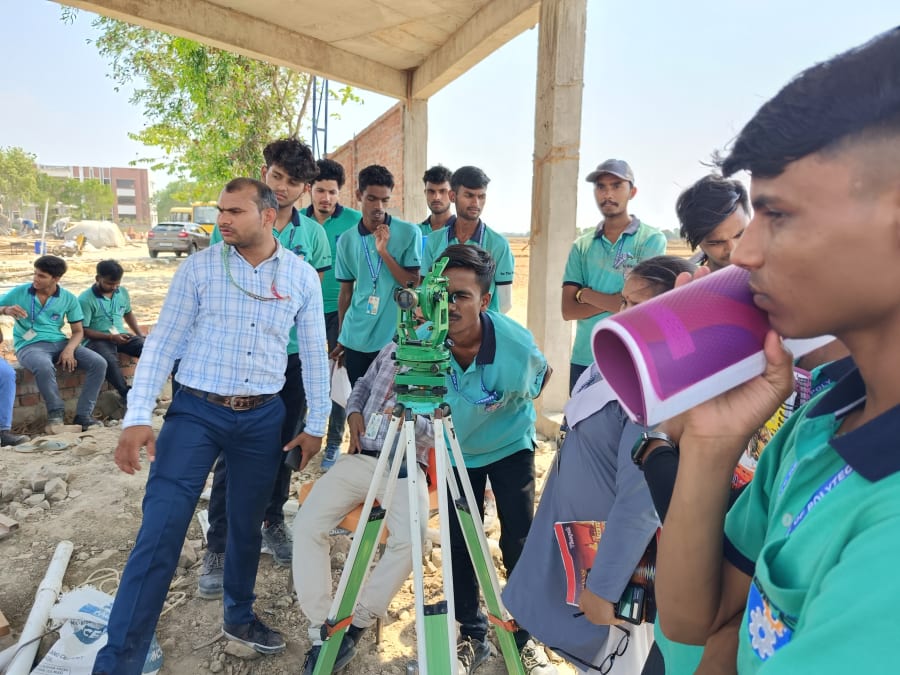
Chains, compasses, theodolites, dumpy and auto levels — students run a full Sem-3 survey camp on the 6-acre campus and adjoining village fields.
Compression testing machine, slump cone, sieve shaker — the BIS-aligned material-testing curriculum is taught hands-on here.
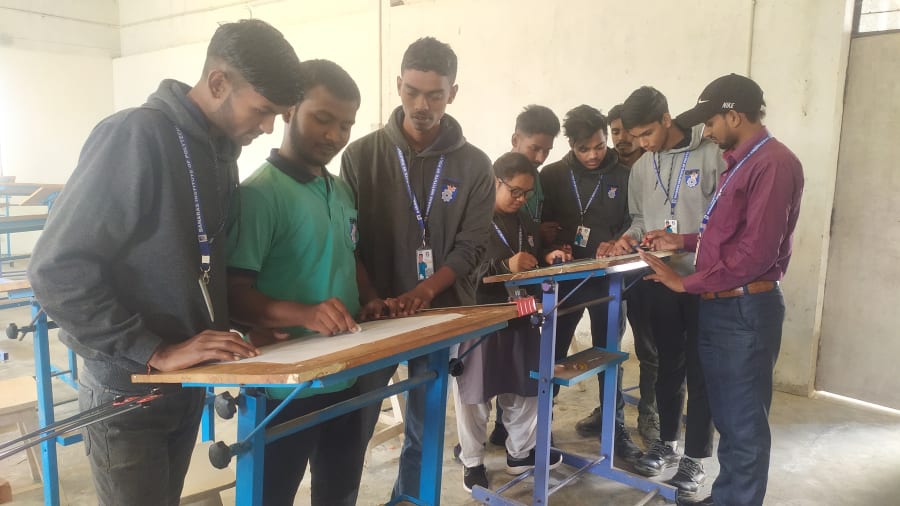
Hand-drafting boards plus AutoCAD workstations for RCC drawings, building plans and the Semester-6 final design submission.
What alumni do next.
- Junior Engineer (Civil) — SSC JE, RRB JE, UPPCL, UP PWD, Indian Railways, Mumbai Metro
- Site engineer / supervisor at builders and construction contractors
- Quantity surveyor / estimator at consulting firms
- Lateral entry to B.Tech Civil at AKTU and state universities
- Self-employed contractor for small-scale residential / commercial work
Where they work.
Class 10 pass. JEECUP 4455.
Eligibility for the Civil Engineering diploma is a Class 10 pass with Mathematics and Science. Admission is through JEECUP Group A — choose institute code 4455 and the Civil Engineering branch during counselling (BTEUP curriculum code 322). AICTE permanent ID 1-488233171.
₹30,150/year. AFRC-set.
Tuition is ₹30,150 per year — the same AFRC-approved figure for every branch at BIPE. UP Government post-matric scholarships cover full or partial tuition for SC, ST, OBC, EWS and Minority students. Hostel and mess fees are separate.
Asked & answered.
Is BIPE Civil Engineering BTEUP 322?+
Yes — Civil Engineering at BIPE is BTEUP code 322, JEECUP institute code 4455. AICTE permanent ID 1-488233171.
Can a civil diploma holder apply for SSC JE or RRB JE?+
Yes — a 3-year BTEUP civil diploma is the standard eligibility for the Junior Engineer (Civil) cadres at SSC, RRB, UPPCL, UP PWD and Indian Railways. Many BIPE alumni work as JEs across these organisations.
How many seats does BIPE have for Civil?+
120 seats — admitted via JEECUP Group A counselling under institute code 4455. AFRC-approved tuition is ₹30,150/year, the same as every other branch at BIPE.
Is site exposure part of the curriculum?+
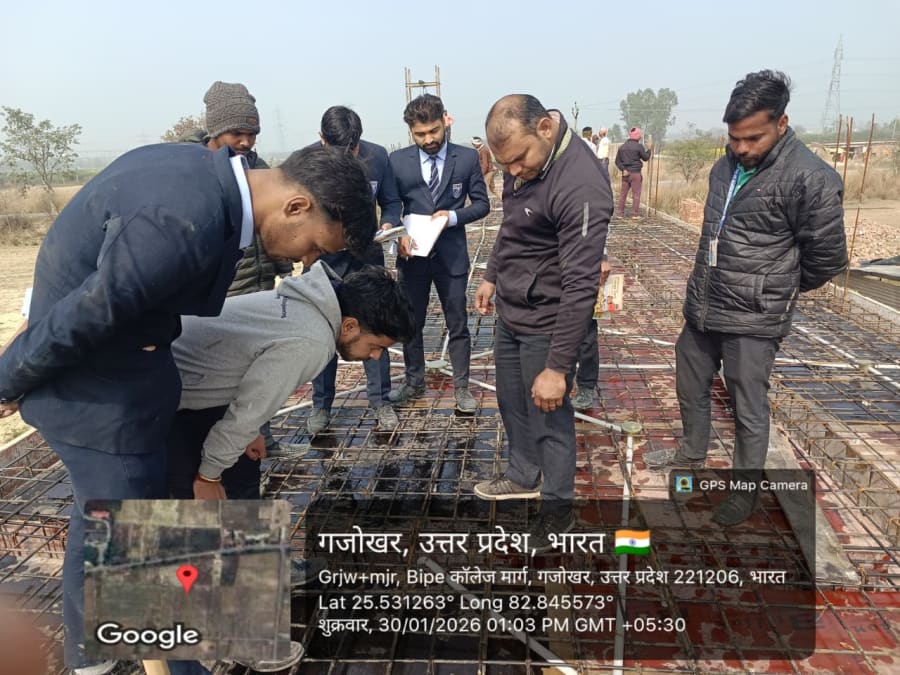
Yes — survey camps in Semester 3, construction-site visits in Semesters 4 and 5, and a mandatory industrial training in Semester 6. Several visits each year happen at active Smart Cities and Kashi corridor sites.
What is the starting salary after a Civil Engineering diploma?+
Government Junior Engineer (Civil) roles at SSC JE / RRB JE / UPPCL / UP PWD start at ₹35,000-44,000/month in-hand plus DA and allowances. Private sector site-engineer roles typically start ₹18,000-28,000/month. With 3-5 years of experience and an SSC JE certification, total compensation crosses ₹50,000/month routinely for BIPE alumni.
Can I become an architect after Civil Engineering diploma?+
Not directly — architecture is a separate professional path requiring a 5-year B.Arch degree after Class 12 with NATA / JEE Architecture entrance. A civil diploma covers structural design and drawing but does not qualify graduates as Architects under the Council of Architecture's licensing rules. Civil diploma holders work on the engineering side of construction (site engineering, RCC design, surveying, project supervision); architects do the design side.
What is the difference between Civil Engineering and Civil Construction Technology diplomas?+
Civil Engineering (BTEUP 322, what BIPE offers) is the broader curriculum: structures, surveying, hydraulics, transportation, environmental engineering, costing — three years of full engineering coverage. Civil Construction Technology is a narrower diploma focused only on construction-site supervision and finishing trades, taught at some ITIs and smaller polytechnics. The civil engineering diploma opens more JE-eligible exams and lateral-entry pathways.
Three years. One diploma. A career.
Applications for the 2026-27 Civil Engineering cohort are open. Five minutes to apply — personal guidance call within 24 hours.